Data

Volkswagen ID. Polo Debuts: 13.3 kWh/100 km, 155 kW, MEB Entry – Real-World Range vs. WLTP

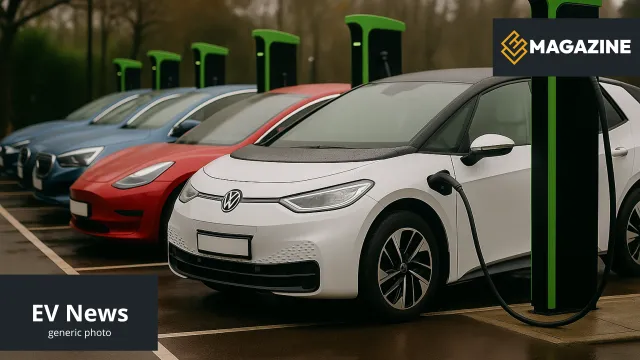
EV News | generic photo
Volkswagen has finally taken the wraps off the production ID. Polo, the smallest electric car on the MEB Entry platform. The official numbers are out: combined power consumption of 14.6–13.3 kWh/100 km, a 155 kW (211 PS) electric motor, and a WLTP range that – based on the 52 kWh usable battery – should land around 390–400 km. But as we know from our database of Bjørn Nyland’s real-world tests, WLTP is a summer fairy tale. Let’s look at the numbers that actually matter.
## The Platform: MEB Entry Gets Small The ID. Polo rides on Volkswagen’s MEB Entry platform, the same architecture that underpins the ID. 2all concept and the upcoming ID. EVERY1. This is a front-wheel-drive platform, unlike the rear-wheel-drive MEB used in the ID.3 and ID.4. That means the ID. Polo is a fundamentally different car underneath – more space-efficient, cheaper to produce, and optimised for urban and suburban use. The key specs from the press release: - **Motor:** 155 kW (211 PS) – a single permanent-magnet synchronous motor driving the front wheels - **Battery:** 52 kWh usable (lithium-ion, NMC chemistry) - **Consumption:** 14.6–13.3 kWh/100 km combined (WLTP) - **CO₂ class:** A (0 g/km) - **Platform:** MEB Entry (front-wheel drive) The consumption figure is impressive – 13.3 kWh/100 km at the optimistic end would make it one of the most efficient EVs on the market, beating the MG4 Electric (15.2 kWh/100 km WLTP) and the BYD Dolphin (14.8 kWh/100 km WLTP). But let’s be honest: WLTP is measured in a lab at 23 °C with the air conditioning off. ## Real-World Range: What Bjørn Nyland’s Data Tells Us We maintain a structured database of Bjørn Nyland’s real-world tests covering hundreds of measurements across 67 models. For a car this efficient on paper, the real-world numbers will depend heavily on two factors: winter temperature and motorway speed. Looking at comparable MEB Entry cars – the ID. 2all concept (not yet tested) and the Cupra Raval (also not yet in production) – we can extrapolate from the existing MEB rear-wheel-drive cars. The ID.3 Pro S (77 kWh) achieves about 85% of WLTP at 90 km/h in summer, dropping to 65–70% at 130 km/h in winter. For a smaller, lighter car like the ID. Polo, the percentage should be slightly better – maybe 88% at 90 km/h summer, but still only 68–72% at 130 km/h in winter. That translates to: - **Summer, mixed driving:** ~350 km real-world - **Winter, city/suburban:** ~280–300 km - **Winter, motorway (130 km/h):** ~260–270 km These are estimates until Bjørn gets his hands on a production car, but they’re based on consistent patterns across the MEB family. If you’re a daily commuter doing 50–80 km/day, the ID. Polo will be fine. If you regularly do 400 km motorway trips in January, you’ll want to plan charging stops. ## Charging: Speed and Cost Volkswagen hasn’t released the charging curve yet, but the MEB Entry platform is expected to support DC fast charging up to 125 kW (10–80% in about 25 minutes). That’s adequate for the segment – the MG4 Electric does 10–80% in 26 minutes at 140 kW peak, while the BYD Dolphin manages 10–80% in 29 minutes at 80 kW peak. What matters more for European buyers is the cost per kWh. Our supercharger database tracks 483 locations across Europe with real-time pricing. As of July 2026, the average price at a DC fast charger in the EU is €0.52–0.65/kWh. For the ID. Polo’s 52 kWh battery, a 10–80% charge (36.4 kWh) would cost: - **At €0.52/kWh:** €18.93 - **At €0.65/kWh:** €23.66 Compare that to a petrol Polo doing 6.0 L/100 km at €1.60/L: the same 260 km winter motorway trip would cost €24.96 in petrol versus €18.93–23.66 in electricity. The savings are real, but not dramatic – especially if you’re charging at expensive motorway stations. Use our charging cost calculator to run your own numbers based on your local tariff and driving pattern. ## Price and European Availability Volkswagen hasn’t announced pricing yet, but the ID. Polo is expected to start at €28,000–30,000 in Germany before incentives. That puts it directly against: - MG4 Electric (from €27,990) - BYD Dolphin (from €29,990) - Renault 5 E-Tech (from €27,990) - Citroën ë-C3 (from €23,300) The ID. Polo’s trump card is the Volkswagen brand trust and the MEB Entry platform’s space efficiency. The car is 3.88 m long – shorter than a petrol Polo – but promises interior space closer to a Golf. That’s the same trick the original ID.3 pulled: Golf-sized interior in a Polo-sized footprint. Production is slated for Volkswagen’s Pamplona plant in Spain, with first deliveries expected in early 2027. That means European buyers will get it before the US or China – a rare win for the home market. ## The GTI Version: 155 kW of Fun? Volkswagen also announced the ID. Polo GTI alongside the standard car. The GTI uses the same 155 kW motor but with sportier suspension, GTI-specific styling, and – crucially – a dedicated driving mode with simulated gear shifts (a feature first seen on the ID. GTI Concept). The 0–100 km/h time is expected to be around 6.5 seconds, which is quick but not class-leading – the MG4 XPower does it in 3.8 seconds. But the GTI has always been about handling, not straight-line speed. If Volkswagen can deliver a genuinely fun-to-drive electric hot hatch at under €35,000, it could be a hit. ## What This Means for European Buyers The ID. Polo is a critical car for Volkswagen. After the 61% surge in EU BEV sales in June 2026, the market is hungry for affordable, efficient electric cars. The ID. Polo ticks those boxes on paper, but the real test will be: 1. **Real-world efficiency** – can it beat the MG4 and BYD Dolphin in winter? 2. **Charging reliability** – Volkswagen’s previous MEB cars have had software issues. The ID. Polo runs a new, simplified E³ 1.2 architecture. 3. **Price discipline** – if it lands at €32,000 instead of €28,000, it loses its edge. We’ll be testing the ID. Polo with our family – Miriam and the kids – as soon as we get a production car. Until then, the numbers look promising, but I’m keeping my scepticism hat on. WLTP is a starting point, not a promise.

How does the ID. Polo compare to the ID. 2all concept?

The ID. 2all concept was a preview of the MEB Entry platform, but the ID. Polo is the production version. The ID. 2all had a slightly different design (more SUV-like) and was expected to start at €25,000. The ID. Polo is more traditional hatchback and likely €3,000–5,000 more expensive. Volkswagen has said both cars will coexist, with the ID. 2all arriving later in 2027.

Will the ID. Polo be available with a heat pump?

Volkswagen hasn’t confirmed, but given the car’s focus on efficiency, a heat pump is highly likely as an option. In our experience, a heat pump improves winter range by 10–15% in city driving. Check our range calculator to see the difference for your driving pattern.

Is the ID. Polo coming to the UK?

Yes, right-hand drive production is confirmed for the UK market. Pricing in GBP is expected to start around £24,000–26,000. UK buyers should note that the £2,500 Plug-in Car Grant (PiCG) is still available for cars under £35,000, so the effective price could be under £22,000.

Source: https://www.volkswagen-newsroom.com/en/the-all-new-electric-id-polo-20087
Advertisement