What changed, in plain language
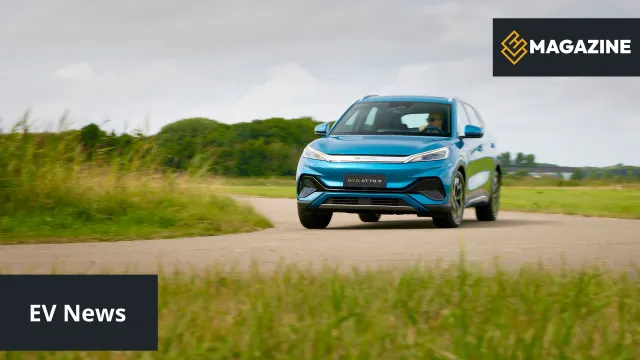
The old Seagull was a genuinely small car: 3,780 mm long, front-wheel drive, torsion-beam rear suspension and a four-seat interior that adults in the back did not enjoy. The new one is a different proposition:
- 4,205 mm long (+425 mm), 1,810 mm wide, 1,570 mm tall, with the wheelbase stretched by 150 mm to 2,650 mm. That is Volkswagen Polo territory, not microcar territory.
- 127 hp rear-mounted motor, rear-wheel drive, multi-link rear suspension and 205 mm tyres on 16-inch wheels.
- 800-volt LFP battery in two sizes: 30 kWh and 39.2 kWh.
- A front trunk where the old car had none, five seats instead of four, a large central touchscreen and an optional lidar-based assistance system.
BYD quotes CLTC range of 320 km and 420 km. CLTC is China's test cycle and is generous; the EPA-converted figures would be roughly 225 km and 295 km. A European WLTP number would probably land in between — call it around 270 km and 355 km — but no WLTP figure exists yet, and that matters more than any press-release claim.
The five-minute charge, translated
BYD says a top-up to 70% takes as little as five minutes, and 97% in nine. Let us put those numbers on the table.
For the 30 kWh pack, 70% is 21 kWh. Delivered in five minutes, that is an average of about 252 kW — roughly 8.4 times the pack's own capacity every hour. For the 39.2 kWh pack it is 27.4 kWh in five minutes, an average of about 329 kW, the same 8.4C rate. Sustaining that on a small LFP pack is at the very edge of what any manufacturer has demonstrated, and the nine-minute 97% claim means 70-to-97% in four minutes, which cuts against the way every lithium pack tapers at the top. Treat it as a manufacturer claim, not a measurement. For comparison, the solid-state cells Mercedes has first call on are quoted at 5–80% in 6.4 minutes — see our earlier piece on ProLogium's Gen4 cells.
The bigger practical problem is the charger, not the car. A 329 kW average needs a stall that can hold that power. In Europe, most DC chargers you meet on a motorway are 50–150 kW, with 350–400 kW units still rare and unevenly distributed. On an ordinary 150 kW charger, a five-minute stop is simply impossible — you are limited to roughly 12.5 kWh, about a third of what the car can take. The car may be ready; the network is not. You can check what is actually available on our charging station map and hunt for the cheapest stalls in our Supercharger price database.
Why the size matters more than the speed
Charging speed is a headline. Interior space is what a family lives with. The 425 mm of extra length and 150 mm of extra wheelbase are the difference between a car that fits two adults in the back and one that fits two child seats without the front passengers eating their knees. Rear-wheel drive with a 127 hp motor and a proper multi-link rear axle is a real step up from a torsion beam, especially loaded with luggage on a bumpy road.
Be honest about the limits, though. At 4.2 metres this is still a small hatchback. Two child seats plus a week's holiday luggage will still mean folding the rear bench or using a roof box. And the frunk is the unsung upgrade of the whole package: a 4.2-metre car with a front locker is where the charging cables, wet jackets and muddy shoes finally live, instead of on top of the suitcase.
What it costs to run — the number that lasts longer than five minutes
Take the 39.2 kWh pack and a realistic 15 kWh/100 km for a small EV:
- Home charging at roughly €0.25/kWh across most EU markets: about €3.75 per 100 km.
- Public DC fast charging at roughly €0.69/kWh: about €10.35 per 100 km.
- A petrol hatchback at 6.0 l/100 km and about €1.55/litre: about €9.30 per 100 km.
Read that twice. Charging at home is roughly a third of the cost of petrol and saves a family driving 15,000 km a year around €830. Fast-charging on the road every time is actually slightly more expensive than petrol — around €1 per 100 km, or roughly €160 a year extra. The five-minute charging claim is a convenience story, not a saving story. Run your own figures in our charging cost calculator and EV savings calculator.
Will Europe get it?
Europe already gets the Dolphin Surf — a modified, safety-compliant version of the China-spec car, and currently BYD's most affordable model here. Whether the second-generation car crosses over in this form is, at the time of writing, unconfirmed.
The commercial backdrop matters. Chinese-built BYD cars carry a 17% EU countervailing duty on top of the standard 10% import tariff, which is precisely why BYD's European assembly in Hungary exists — and why LFP cell production on the continent, such as CATL's €7.34bn plant in Debrecen, is being watched so closely. Small, cheap EVs are also the segment driving Europe's growth: electric cars took 29.2% of the European market in August, outselling petrol and diesel combined. A genuinely roomy, 4.2-metre electric hatchback at the right price is exactly what that market needs.
What to do with all this
Do not plan a purchase around a five-minute claim. Check the chargers you actually use — the one near your flat, the one on your holiday route. Compare home and public charging costs for your own mileage. And watch for two things on the second-generation Seagull: a European WLTP range figure, and a price in euros rather than dollars. Until both exist, this is a very interesting car and a very unfinished story.
Does five-minute charging work on the chargers I can find today?
Rarely. A five-minute charge to 70% on the 39.2 kWh pack means an average of about 329 kW. Most European DC chargers deliver 50–150 kW, which would give you roughly 12.5 kWh in five minutes at 150 kW — about 80 km of driving rather than the full 183 km the car could theoretically accept.
Is a small EV cheaper to run than a petrol car if I can't charge at home?
Not necessarily. On our figures — 15 kWh/100 km and €0.69/kWh on public DC — you pay about €10.35 per 100 km, slightly more than a 6.0 l/100 km petrol hatchback at €1.55/litre (€9.30). Home charging at €0.25/kWh brings it down to about €3.75 per 100 km, which is where the real saving lives.
Source: https://insideevs.com/news/809788/new-byd-seagull-dolphin-surf-5-minute-charging/